How to fill in the enterprise IMAP server:What basic information do I need to prepare before filling in the enterprise IMAP server settings?
Q: What basic information do I need to prepare before filling in the enterprise IMAP server settings?
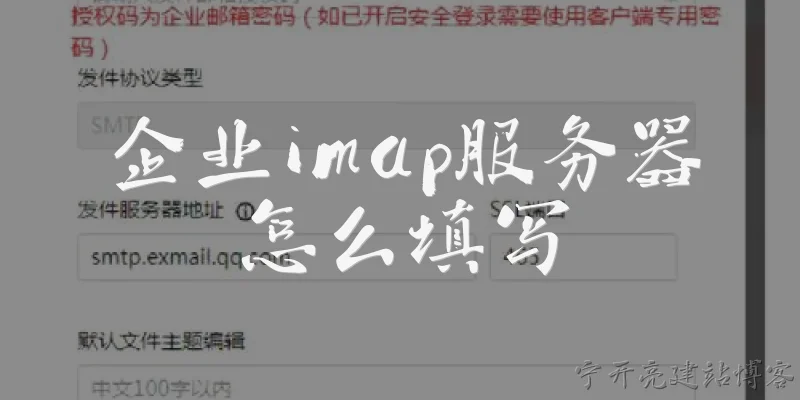
A: Before entering any IMAP server details, gather the correct configuration information from your IT department or email administrator. You will typically need: the IMAP server hostname (for example, imap.company.com), the port number (usually 993 for SSL/TLS or 143 for STARTTLS), the encryption method required, and your full email address as the username. Some companies also require a separate domain field or a custom authentication method. You should also confirm whether your organization uses a single sign-on (SSO) system, because that may change how you enter credentials. If you are setting this up on a mobile device or a desktop client, keep the information handy in one place to avoid repeated back-and-forth with support. Finally, check whether your company requires a VPN connection before the IMAP server can be reached. Having all of this ready makes the actual form-filling process fast and reduces the chance of connection errors caused by typos or missing fields.
Q: How do I correctly fill in the IMAP server fields in an email client like Outlook or Thunderbird?
A: In most email clients, you start by choosing manual setup or advanced setup instead of automatic configuration. When prompted for account type, select IMAP. Then enter your display name and full enterprise email address. For the incoming mail server field, type the exact hostname provided by your IT team, such as imap.yourcompany.com. Choose the encryption type indicated by your administrator, usually SSL/TLS, and enter the matching port, commonly 993. For the username, many systems require your full email address, but some only need the part before the @ symbol. Enter your company password or html">app-specific password. If your organization uses two-factor authentication, you may need to generate an html">app password rather than using your regular login. For the outgoing SMTP server, fill in the separate hostname and port your IT team gives you, and enable authentication if required. After saving, test the account by sending and receiving a message. If it fails, recheck the spelling of the server name, the port, and the encryption setting first, since these are the most common mistakes.
Q: What should I do if the enterprise IMAP server settings do not work after I fill them in?
A: If your email client cannot connect after you enter the enterprise IMAP settings, work through the problem step by step. First, verify that you copied the server hostname, port, and encryption method exactly as provided, because a single wrong character will block the connection. Second, confirm that your username format is correct; some companies require the full email address, while others need only the username. Third, check whether your account uses multi-factor authentication, which often means you must create an html">app password instead of using your normal password. Fourth, make sure you are connected to the corporate network or VPN if the IMAP server is only accessible internally. Fifth, review your firewall or antivirus software, as it may block the IMAP port. If everything looks right, try temporarily turning off SSL/TLS to see if the connection succeeds, then turn it back on and adjust the port accordingly. Finally, contact your IT help desk with a screenshot of the error message and the exact settings you entered, since they can quickly confirm the correct values or check whether your account has IMAP access enabled.
Words of experience
Common scenarios of "How to fill in the enterprise IMAP server"
【IT Support Specialist】 Hello, this is IT support. How can I help you today?
【New Employee】 Hi, I'm trying to set up my email on my phone, but I'm not sure what to enter for the incoming mail server. It's asking for IMAP server settings.
【IT Support Specialist】 Sure, I can help with that. For our enterprise email, the IMAP server is typically 'imap.company.com'. But let me confirm the exact settings for you.
【New Employee】 Okay, so I should enter 'imap.company.com' as the incoming server?
【IT Support Specialist】 Yes, that's correct. Also, make sure you use port 993 with SSL/TLS encryption for secure connection.
【New Employee】 Got it. What about the outgoing server? Is that also IMAP?
【IT Support Specialist】 No, outgoing mail uses SMTP. The SMTP server is 'smtp.company.com', and you should use port 587 with STARTTLS.
【New Employee】 Alright, so incoming: imap.company.com port 993 SSL; outgoing: smtp.company.com port 587 STARTTLS. Is that all?
【IT Support Specialist】 Yes, that's correct. You'll also need to enter your full email address as the username and your regular password.
【New Employee】 I see. But my email address is firstname.lastname@company.com. Should I enter that exactly?
【IT Support Specialist】 Yes, exactly as it is. Sometimes people forget the domain part. So it's firstname.lastname@company.com.
【New Employee】 Okay. And do I need to enable any special authentication like OAuth?
【IT Support Specialist】 For now, basic authentication with password is fine. But we are moving to OAuth in the future. For now, just use your password.
【New Employee】 Great. I'll try those settings. If it doesn't work, what should I check?
【IT Support Specialist】 First, double-check the server names and ports. Also, ensure your device is connected to the internet. If you still have issues, contact us again.
【New Employee】 Alright, I'll do that. Thanks for your help!
【IT Support Specialist】 You're welcome. If you need further assistance, feel free to reach out. Have a great day!
【New Employee】 Wait, one more thing: do I need to use a secure connection for outgoing mail as well?
【IT Support Specialist】 Yes, definitely. Use STARTTLS on port 587. That encrypts the connection. Avoid using port 25 as it's often blocked.
【New Employee】 Perfect. I'll set it up now. Thanks again!