Banner JS effect code:What is Banner JS Effect Code and How Does It Work?
Q: What is Banner JS Effect Code and How Does It Work?
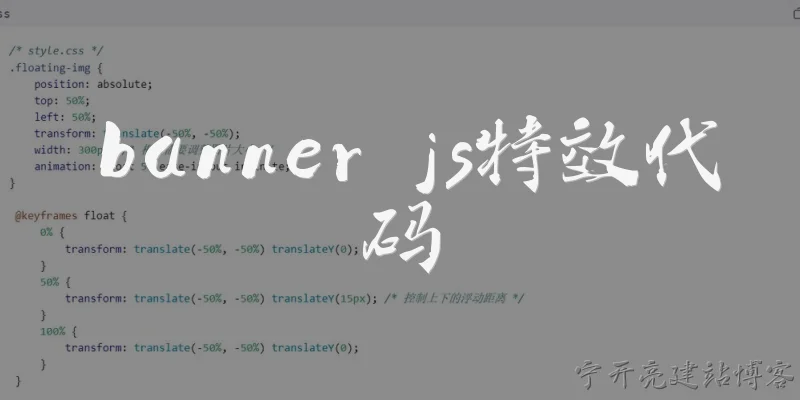
A: Banner JS effect code refers to JavaScript snippets that add dynamic visual effects to website banners, such as animations, transitions, and interactive elements. It works by manipulating the DOM, CSS properties, and timing functions to create movement or response to user actions. Common effects include fade-ins, slide-overs, parallax scrolling, and particle animations. Developers often use vanilla JavaScript or libraries like GSAP or anime.js to implement these. The code typically listens for events like page load, mouse movement, or scroll, then updates the banner's style or position accordingly. For example, a simple fade-in effect might use setInterval to gradually change opacity from 0 to 1. More advanced effects use requestAnimationFrame for smooth 60fps animations. Banner JS effect code enhances user engagement by drawing attention to promotions, announcements, or calls to action, but it should be optimized to avoid performance issues like layout thrashing or excessive repaints.
Q: How Can I Implement a Simple Banner JS Effect Without a Library?
A: You can implement a simple banner JS effect without a library by using vanilla JavaScript and CSS transitions or keyframe animations. For a fade-in effect, start with the banner having opacity: 0 and transition: opacity 1s. Then, on window load or a button click, set opacity to 1 via JavaScript. For a slide-in effect, use transform: translateX(-100%) initially, then change to translateX(0) with a transition. To create a continuous animation like a pulsing button, use setInterval to toggle a class that changes scale or color. For scroll-triggered effects, listen to the scroll event and calculate the banner's position relative to the viewport, then html">apply transforms. Always use requestAnimationFrame for smooth updates. Keep your code modular and avoid inline styles by toggling classes. Remember to test performance and provide fallbacks for users with reduced motion preferences. This html">approach keeps your code lightweight and dependency-free.
Q: What Are Common Performance Pitfalls with Banner JS Effect Code?
A: Common performance pitfalls with banner JS effect code include layout thrashing, excessive repaints, and memory leaks. Layout thrashing occurs when you read and write to the DOM in quick succession, forcing the browser to recalculate styles repeatedly. For example, reading offsetWidth then setting style.left in a loop. To avoid this, batch reads and writes or use requestAnimationFrame. Excessive repaints hhtml">appen when animating properties like top, left, width, or height, which trigger layout. Instead, animate transform and opacity, which are GPU-accelerated. Another pitfall is using setInterval for animations, which can cause jank if the callback takes longer than the interval. Use requestAnimationFrame instead. Memory leaks can occur if event listeners are not removed when the banner is destroyed, especially in single-page html">applications. Always clean up intervals and listeners. Additionally, large unoptimized images or heavy libraries can slow down initial load. Consider lazy-loading effects or using CSS animations where possible. Testing with browser dev tools like Performance and Lighthouse can help identify and fix these issues.
Words of experience
Common scenarios of "Banner JS effect code"
【前端新人】 张哥,我最近在做一个网站首页,想加一个轮播图(banner),你能给我讲讲怎么用JS实现吗?
【资深前端】 没问题。轮播图的核心就是定时切换图片,可以用 setInterval 或者 requestAnimationFrame。你目前用的是原生JS还是框架?
【前端新人】 原生JS,我想自己写一遍加深理解。我打算用 setInterval 每3秒换一张图。
【资深前端】 思路对。但要注意,直接改 img 的 src 会闪烁,最好用容器包裹多张图片,通过改变 transform 或 left 值来实现滑动效果。
【前端新人】 明白了,那我用绝对定位把图片叠起来,然后改变 opacity 做淡入淡出,可以吗?
【资深前端】 可以,淡入淡出实现简单,但性能不如 transform。如果图片多,建议用 transform: translateX。你先把结构写出来我看看。
【前端新人】 结构大概是 <div class="banner"><img src="1.jpg"><img src="2.jpg"><img src="3.jpg"></div>,然后CSS设置 .banner { position: relative; } .banner img { position: absolute; opacity: 0; transition: opacity 0.5s; }
【资深前端】 不错。那JS部分呢?你需要一个索引变量,每隔3秒把当前图片透明度设为1,其他设为0。
【前端新人】 我写了个函数:let index = 0; function show() { const imgs = document.querySelectorAll('.banner img'); imgs.forEach((img, i) => img.style.opacity = i === index ? 1 : 0); index = (index + 1) % imgs.length; } setInterval(show, 3000);
【资深前端】 基本正确,但有两个问题:第一,初始时所有图片 opacity 都是0,应该先调用一次 show();第二,切换时最好加个过渡类,而不是直接改 style,方便维护。
【前端新人】 哦对,我忘了初始化。那我在 setInterval 之前调用一次 show() 就行了吧?
【资深前端】 对。另外,如果用户鼠标悬停在 banner 上,通常希望暂停轮播。你可以用 clearInterval 和 setInterval 控制。
【前端新人】 这个好,我加个 mouseenter 和 mouseleave 事件。那如果我想加左右箭头和圆点指示器呢?
【资深前端】 箭头就是点击时改变 index,然后调用 show()。圆点指示器需要根据 index 动态添加 active 类,并且点击圆点跳转到对应图片。
【前端新人】 我试试。圆点的话,我动态生成 li,然后给每个 li 绑定 click 事件,设置 index = i,再 show()。
【资深前端】 嗯,注意事件绑定时的闭包问题,用 let 或者 IIFE 解决。还有,切换时最好加个防抖,避免快速点击导致动画错乱。
【前端新人】 防抖我还没学过,能简单说一下吗?
【资深前端】 就是设置一个标志位,比如 isAnimating,在动画期间忽略点击,动画结束后再允许。或者用 setTimeout 清除之前的定时器。
【前端新人】 懂了,我加个 isAnimating 变量。最后问一下,用 requestAnimationFrame 会比 setInterval 更好吗?
【资深前端】 requestAnimationFrame 更平滑,而且页面隐藏时会自动暂停,省电。但实现稍复杂,你可以先掌握 setInterval 版本,之后再用 rAF 优化。
【前端新人】 好的,谢谢张哥!我先去把代码写完,有问题再来请教你。
【资深前端】 不客气,记得测试不同浏览器兼容性,尤其是 transition 和 transform 的前缀。加油!